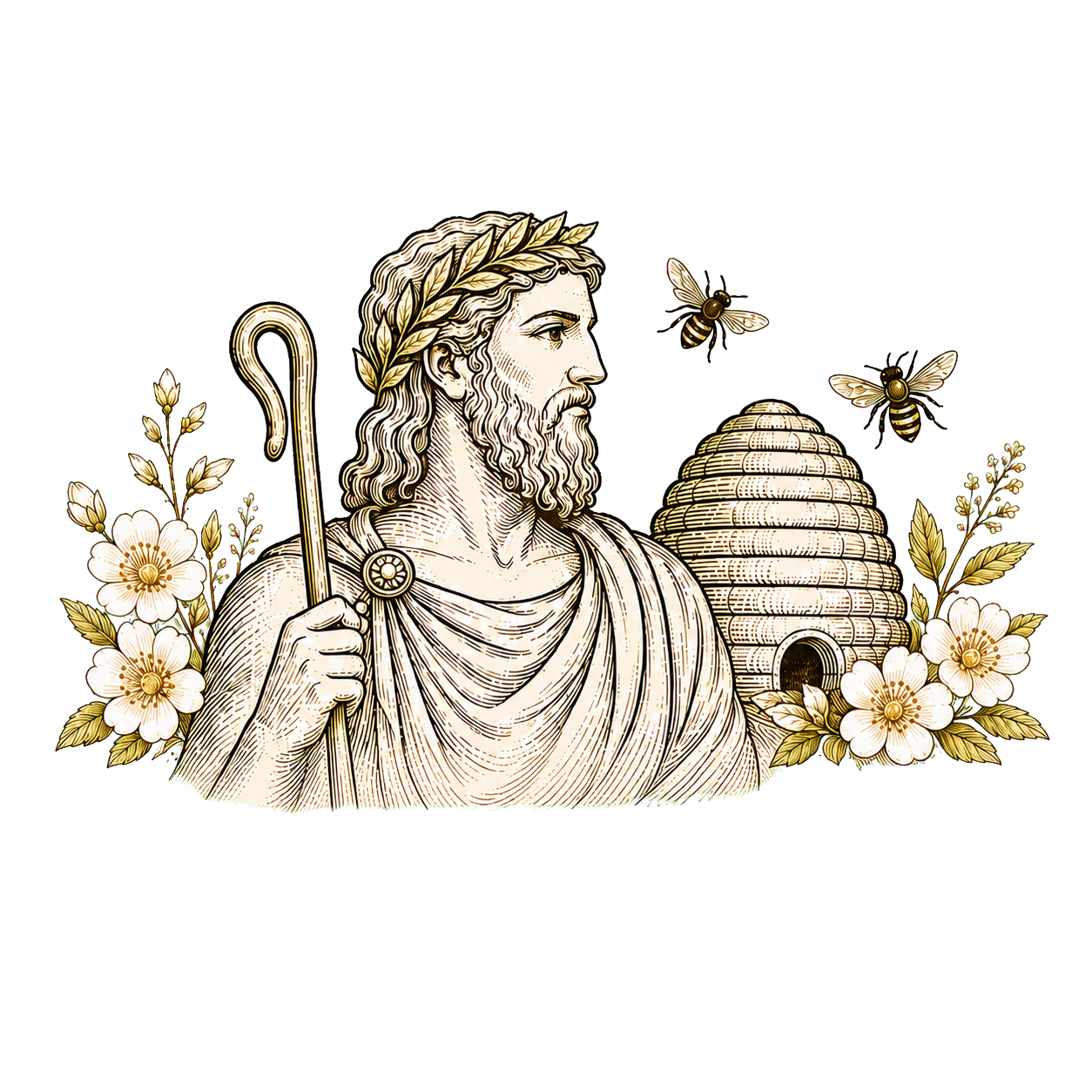
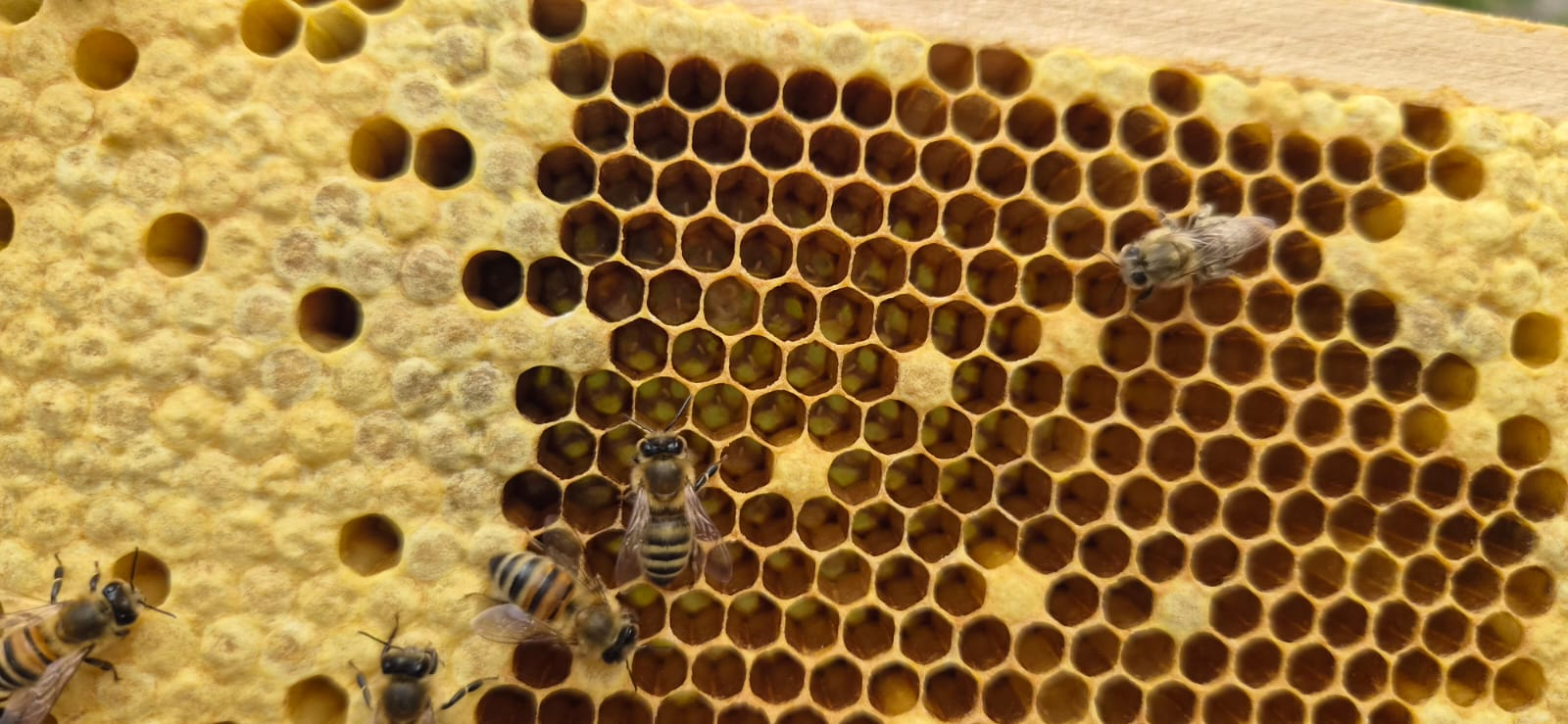
A honey bee colony moves with the seasons. It grows, gathers food, builds comb, protects its stores and gradually prepares for winter. The beekeeper follows that rhythm and intervenes only when necessary.
Early spring
On the first mild days bees make cleansing flights and return with pollen. The queen increases her laying, while workers keep the brood warm. Food stores can fall quickly during cold or wet spells.
April and May
Longer days bring rapid growth. Blossom, dandelion, willow and hawthorn provide food. Strong colonies need space and may prepare to swarm, their natural way of reproducing.
Early summer
In June the colony is often near full strength. Foragers collect nectar, pollen, water and propolis. Nectar is passed between bees and dried until it becomes honey.
July
After the longest day, brood rearing gradually declines. Honey may be harvested only when the colony can spare it. Attention then turns increasingly to varroa and the health of future winter bees.
August and September
The colony produces long-lived winter bees. Adequate food, low disease pressure and enough bees are essential. The beekeeper checks stores and feeds when required.
Autumn
The brood nest becomes smaller and flight activity decreases. Unnecessary inspections are avoided. The hive should remain dry, secure and protected from mice.
Winter
The bees form a cluster and live from their stores. The beekeeper mainly observes from outside and may check the weight without opening the hive.
The cycle begins again
Every spring is different. Weather, flowering and the colony itself change from year to year. That is why beekeeping is above all the art of careful observation.