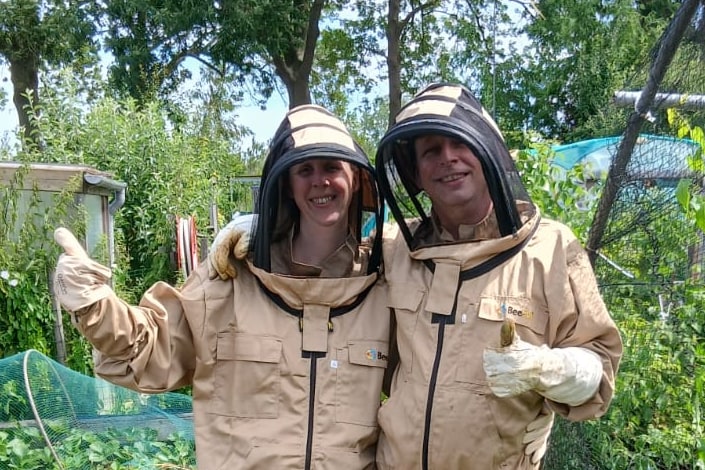
Together with my partner Jolanda, I completed the basic beekeeping course of the Dutch Beekeepers’ Association in 2025. Curiosity about bees soon grew into a lasting passion.
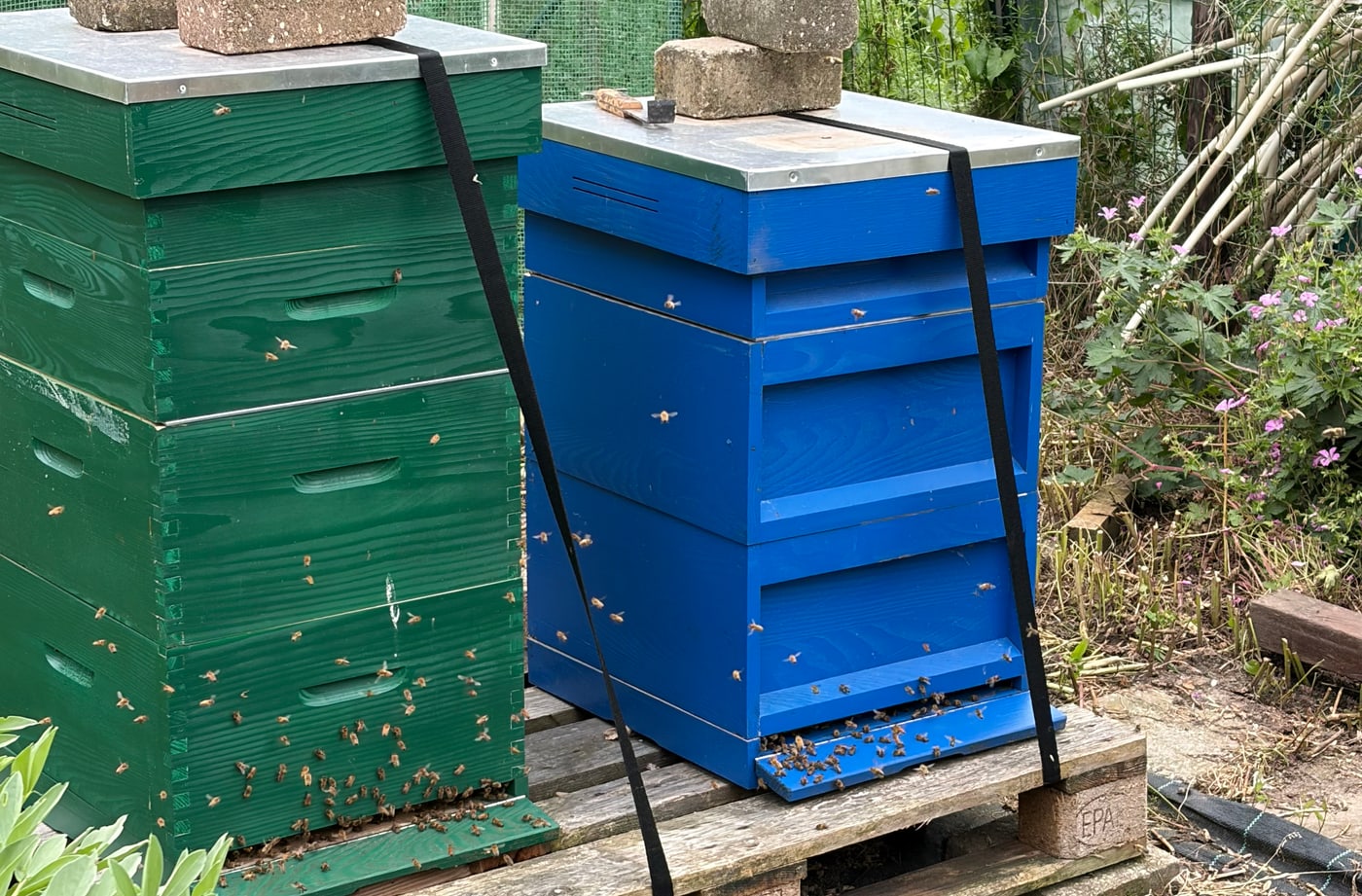
Each hive has its own story. The bees in the blue hive began as a swarm collected in Dordrecht and were given a new home in Wijk bij Duurstede.
At the end of the course I also received a Carnica colony, now housed in the green hive. Carnica bees are known for their gentle nature and strong spring development.
In spring 2026 the queen disappeared from the blue hive. I introduced brood from the green Carnica colony so the bees could raise a new queen. This connected the histories and genetics of the two colonies.
A nucleus colony later became the third colony. It is another lesson in how brood, young bees and the right conditions can grow into an independent colony.
Beekeeping is much more than harvesting honey. It means observing, learning and working with nature. Sometimes intervention is needed; at other times the best choice is to leave the bees undisturbed.
The name Aristaios
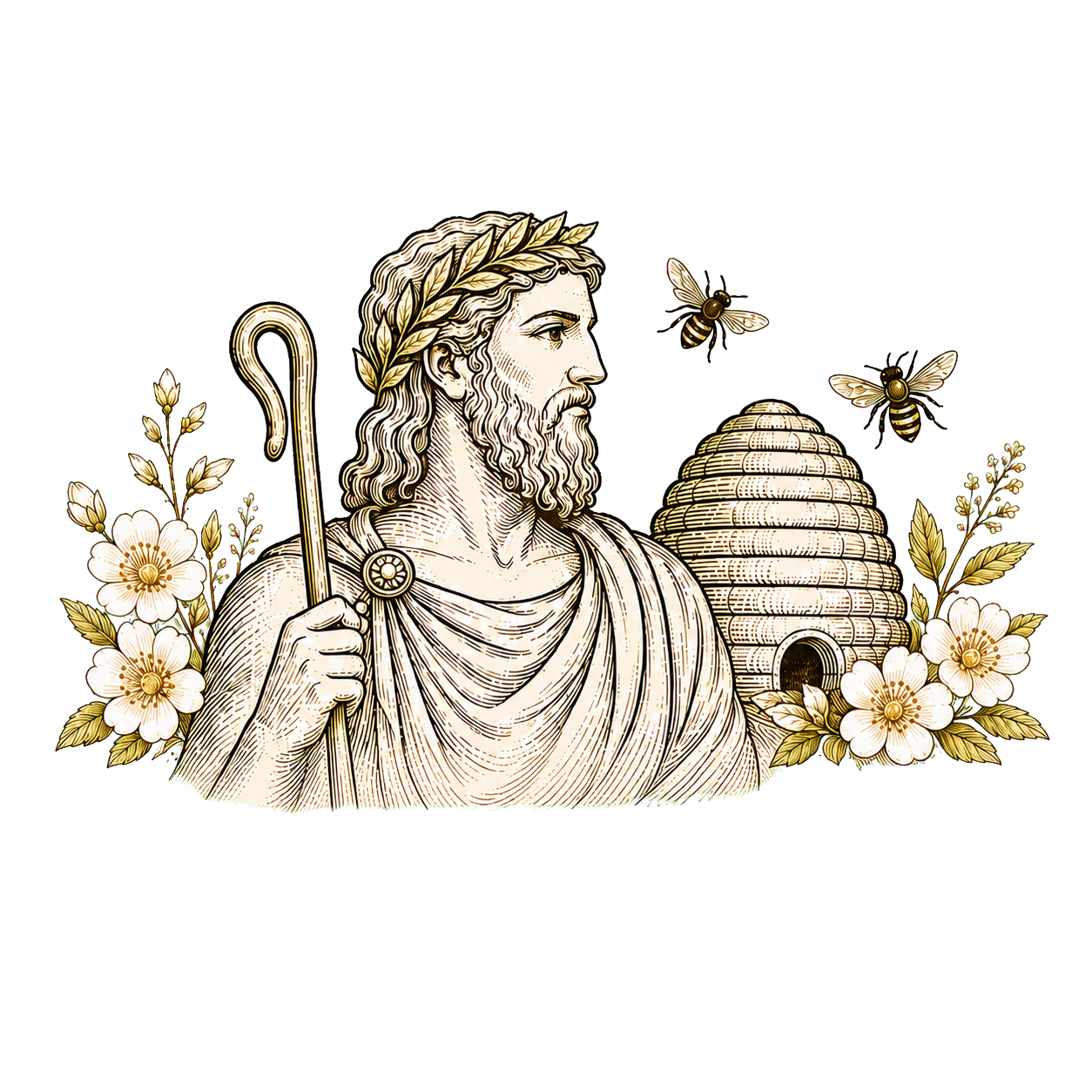
In Greek mythology, Aristaios was a son of Apollo and the nymph Cyrene. He was associated with rural skills including beekeeping, honey, olive growing and cheese making. That connection with bees, craftsmanship and the land made the name a natural fit.
Aristaios shows where its honey comes from: Wijk bij Duurstede, colonies cared for with attention, and a recognisable landscape rather than an anonymous product.